
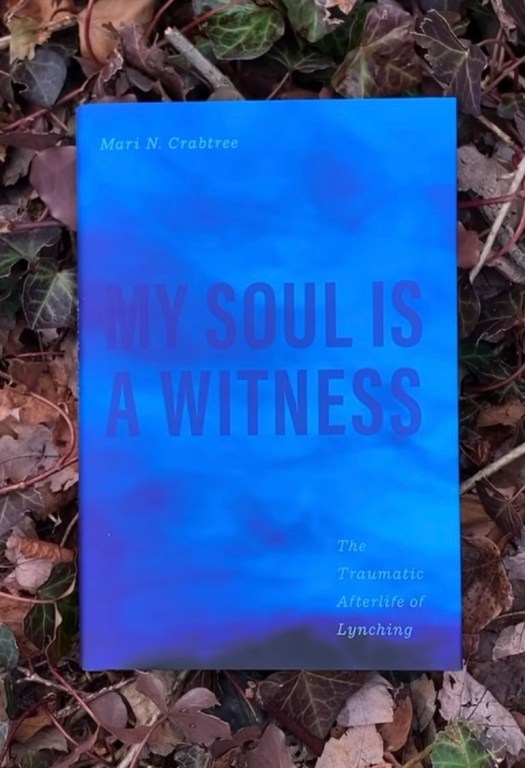
An intimate look at the afterlife of lynching through the personal stories of Black victims and survivors who lived through and beyond its trauma
My Soul Is a Witness traces the long afterlife of lynching in the South through the traumatic memories it left in its wake. Synthesizing the analytical frameworks of Black studies, history, and cultural studies, Mari N. Crabtree unearths how African American victims and survivors found ways to live through and beyond the horrors of lynching, offering a theory of African American collective trauma and memory rooted in the ironic spirit of the blues sensibility—a spirit of misdirection and cunning that blends joy and pain.
Black southerners often shielded their loved ones from the most painful memories of local lynchings with strategic silences but also told lynching stories about vengeful ghosts or a wrathful God or the deathbed confessions of a lyncher tormented by his past. They protested lynching and its legacies through art and activism, and they mourned those lost to a mob’s fury. They infused a blues element into their lynching narratives to confront traumatic memories and keep the blues at bay, even if just for a spell. Telling their stories troubles the simplistic binary of resistance or submission that has tended to dominate narratives of Black life and reminds us that amid the utter devastation of lynching were glimmers of hope and an affirmation of life.
Available for purchase at Bookshop, Powell’s, Audible, and elsewhere.
Copyright Year: 2022
ISBN: 9780300250411
Pages: 312
Hardcover: $32.50
(Also available as an eBook, audiobook, CD, and MP3 on CD.)
“Mari Crabtree has written a hauntingly beautiful book, telling the stories of those whose lives have been weighed down by the traumatic memory of lynching and a nation haunted by the traumatic memory of what it has done and what it tries not to remember. Powerful. Disturbing. Brilliant. A must read!”
Eddie S. Glaude Jr., author of Begin Again: James Baldwin’s America and Its Urgent Lessons for Today
“My Soul Is a Witness examines the oral histories, literature, art, and music that constitute the living memory of lynching. It’s an exceptionally researched, exquisitely written, and important book.”
Julie Buckner Armstrong, author of Mary Turner and the Memory of Lynching
“A compassionate, sensitive, and insightful meditation on where to discern the hidden memories of the collective trauma of lynching and where to discover the manifest forms of African American resistance and resilience in response to it.”
Ashraf H. A. Rushdy, author of American Lynching and The End of American Lynching
“Compelling. … Powerful.”
Eric Herschthal, The New Republic
“An excellent study of the complexities of collective trauma and intergenerational memories of violence.”
Tiffany A. Player, Journal of Southern History
Featured in Amherst Magazine, Cornellians, American Catholic Studies Newsletter, and elsewhere.
 Mari N. Crabtree